
Status Match and Challenge Guide 2026
A 2026 guide to airline and hotel status matches, challenges, and fast tracks: what is live, what documents you need, and how to use a matc…
Read article →Independent Miles Mosaic guide. No programme partnerships, no account linking, no scraped balances. Sources cited below; corrections welcomed.
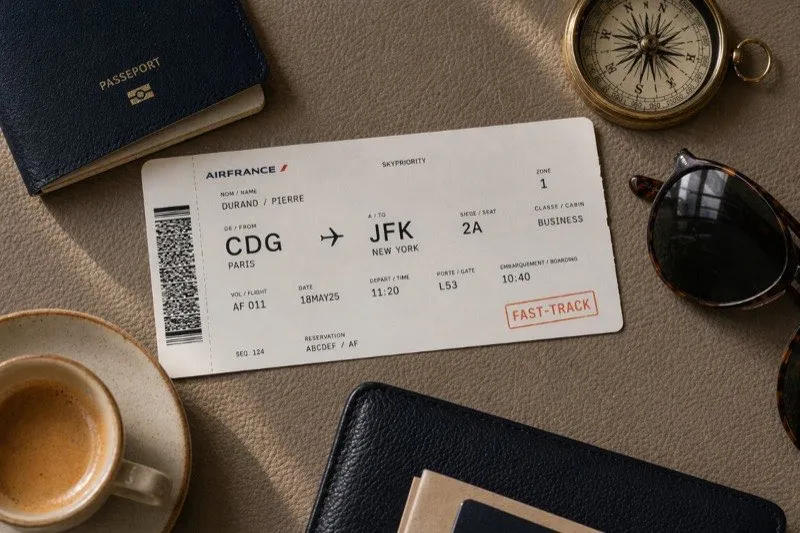
If you search for Flying Blue status match advice in 2026, you will quickly run into a problem: much of the internet still describes it as if it were a standing, universal, near-frictionless shortcut to Air France and KLM elite status. That is no longer a safe way to read the market.
What is publicly live right now is more specific than that. Flying Blue has a paid status-match offer run through a dedicated status-match platform. It is available only in select regions, its fees vary by country and target tier, and the highest matched tier is not available everywhere. In other words, it can still be very useful, but only if you understand exactly what the current offer is and what it is not.
This guide is built around that distinction. It covers the current live public offer, who can actually use it, what you get if approved, which outside airline statuses map into Silver, Gold, or Platinum, and whether paying for the match makes strategic sense for your travel pattern. For the broader programme itself, see our complete Flying Blue guide. For the wider market context, see our 2026 status-match landscape.

Flying Blue status match is worth paying attention to in 2026, but only if you fit the live offer.
If you are based around Amsterdam Schiphol, Paris Charles de Gaulle, or any regular SkyTeam-heavy pattern, the offer can still be excellent. If you do not have real Air France, KLM, or broader SkyTeam usage ahead, it is easy to overpay for a badge you will barely use.
The current public offer is run through flyingblue.statusmatch.com. The official FAQ states that travellers with elite status in an eligible airline loyalty programme can apply for a Flying Blue status match, pay the applicable fee, and if approved receive 12 months of Flying Blue Silver, Gold, or in some cases Platinum status.
That description sounds simple, but several caveats are doing real work here.
That is why the article matters. This is not a broad, timeless Flying Blue “challenge” in the way many older points blogs describe it. It is a current paid acquisition product with regional rules and clear constraints.
As of September 18, 2026, the public FAQ shows the following active region blocks and fees:
| Region | Silver | Gold | Platinum | Key note |
|---|---|---|---|---|
| Greece | EUR 89 | EUR 199 | EUR 349 | Priced in euros; Platinum available |
| Argentina, Brazil, Chile, Colombia, Costa Rica, Ecuador, Paraguay, Peru, Uruguay, Israel | USD 99 | USD 299 | USD 399 | Platinum not available for Brazil; a footnote on the same FAQ also excludes Argentina and Chile, so confirm the tier offered when you apply |
The same FAQ now lists more offers under its recently ended heading than as open. That section includes the United States (USD 99 Silver, USD 199 Gold, no Platinum), Canada (CAD 149 Silver, CAD 299 Gold, no Platinum), Italy, Singapore and Thailand, India and Japan, China, Hong Kong and Taiwan, and a block spanning India, the Middle East, and parts of Africa. View from the Wing reported on June 11, 2026 that the United States and Canada offer would end on Saturday, June 13. Apart from Greece, which is still open, and Italy, now recently ended, the United Kingdom, Germany, and the other European markets this guide listed in April no longer appear on the FAQ at all. That is a useful reminder that the geography can change and that yesterday's valid blog post can become tomorrow's misleading evergreen.
The official FAQ includes an eligibility table with illustrative mappings. The exact table is longer than most readers need, but the practical point is that Flying Blue is not limiting the current public offer to one alliance. The table shows eligible examples across oneworld, Star Alliance, and non-aligned or mixed carrier groups.
| Programme | Illustrative Silver match | Illustrative Gold match | Illustrative Platinum-eligible tier |
|---|---|---|---|
| American AAdvantage | Gold | Platinum | Platinum Pro, Executive Platinum, Concierge Key |
| British Airways Club | Bronze | Silver | Gold, Gold Guest List, Premier |
| Lufthansa Miles & More | Frequent Traveller | Senator | HON Circle |
| United MileagePlus | Premier Silver | Premier Gold | Premier Platinum, Premier 1K, Global Services |
| Qatar Airways Privilege Club | Silver | Gold | Platinum |
| Turkish Miles&Smiles | Classic Plus | Elite | Elite Plus |
| Air Canada Aeroplan | Elite 25K / 35K | Elite 50K | Elite 75K / Super Elite |
Two nuances matter here. First, the FAQ describes these as illustrative examples, not a promise that every airline, every region, and every future tier map will stay fixed. Second, Platinum-eligible source tiers do not automatically mean you personally can receive Flying Blue Platinum. Region caps still control the maximum tier available to you. Brazil residents, for example, can currently match only up to Gold, as can those in Argentina and Chile under a footnote on the same FAQ, and the ended United States and Canada offer never went above Gold either.
Your Air France-KLM Flying Blue forecast
Chasing or holding Gold? Enter what you have so far and see where you land. It runs in your browser; nothing is sent anywhere until you choose to save it.
Thresholds verified 2026-06-27. Source Qualification window: a personal period of up to 12 months that restarts when you move up a level.
The official public process is straightforward enough that most readers can decide within a few minutes whether it is worth pursuing.
The current FAQ also gives a useful service-level timeline. You should be informed within three business days after a completed application and requested documentation. If approved, the new status should appear in your account within five business days.
That is much cleaner than many airline status-match processes, but the one-match rule means you still want to be deliberate. If your outside airline status is about to be upgraded, the FAQ itself suggests waiting until the higher tier is in your account before applying, because your match is based on the status you hold at the time of application.
The FAQ is intentionally broad, but it gives enough direction to avoid sloppy applications. You should expect to provide proof of elite status from the outside programme, and you may also be asked for government-issued ID to confirm identity or region eligibility. In practice, that means you should have a clean digital membership card or account screenshot showing your name and current tier, plus identification that matches the personal details on your Flying Blue account if requested.
This is one of those small details that matters more than people think. A paid status match is not the moment for blurry screenshots, expired cards, or inconsistent account names across programmes. The cleaner your documentation, the less likely you are to waste time in back-and-forth while the offer itself remains subject to change.
This is where many weaker articles drift into fantasy. The value of a Flying Blue match does not come from vague prestige. It comes from whether the tier benefits will be consumed often enough in the next 12 months to justify the fee.
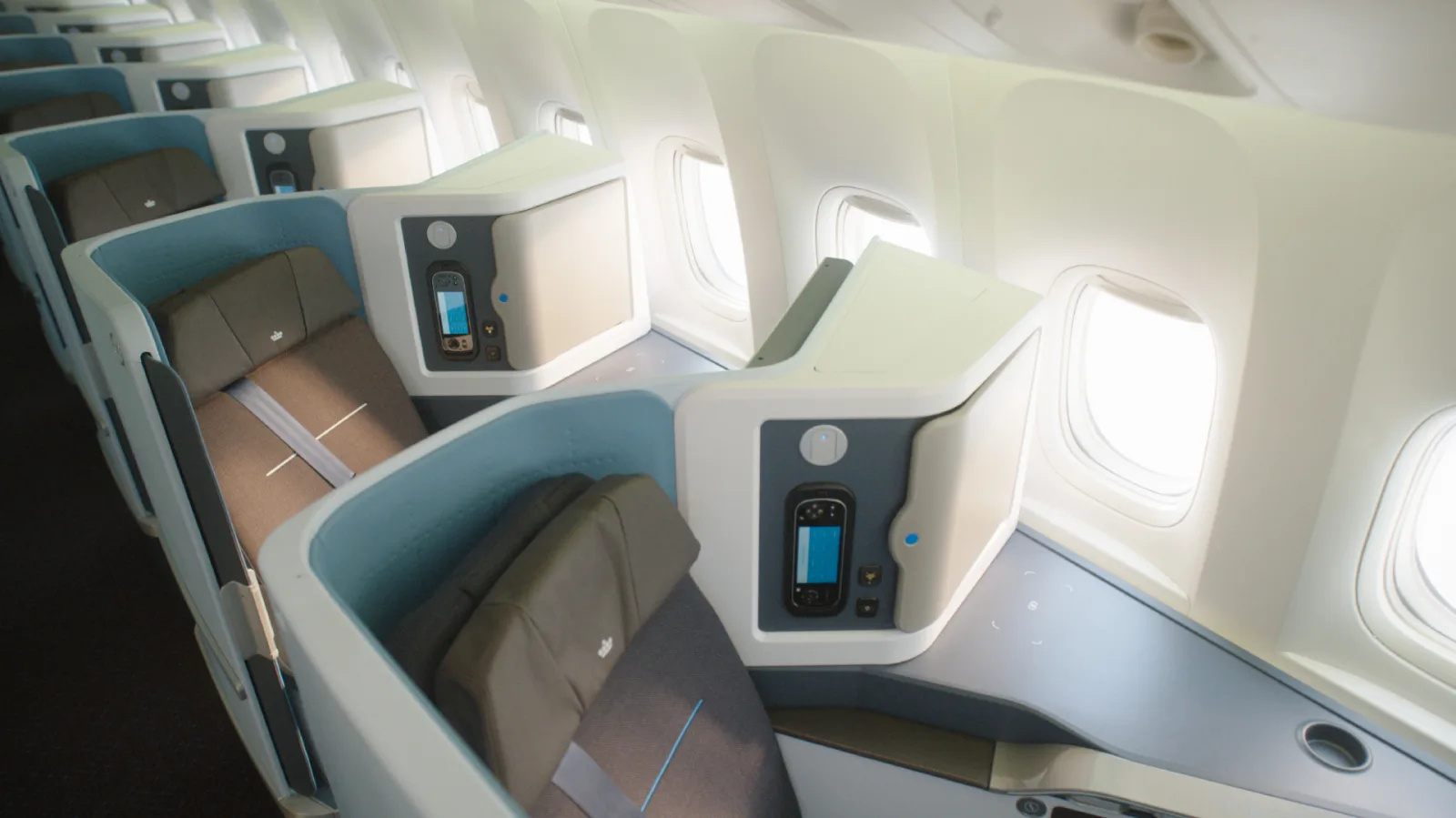
Current official Air France Flying Blue pages describe Silver as including 6 Miles per euro spent, priority access for check-in and baggage drop-off, free standard-seat selection, certain seat options from 24 hours before departure, and one free extra checked baggage item on SkyTeam flights. That is useful if you fly Air France, KLM, or SkyTeam often enough to value smoother airport handling, but Silver is not where the emotional payoff starts.
Gold is where the match becomes strategically interesting. Current official tier-benefit pages describe Gold as including 7 Miles per euro spent, lounge access with a guest, SkyPriority across the airport, free standard-seat selection, some free seat options from 72 hours before departure, and one free extra checked baggage item on SkyTeam flights.
In practice, Gold is the tier most readers should care about, especially if they will pass through Amsterdam Schiphol, Paris Charles de Gaulle, or a meaningful SkyTeam pattern in the next year. Lounge access with a guest and day-of-travel priority treatment are the benefits that turn a status match from a spreadsheet exercise into something you actually feel.

Current official tier-benefit pages describe Platinum as including 8 Miles per euro spent, lounge access with a guest, SkyPriority, free standard-seat selection, broader seat-option benefits, a larger Air France/KLM baggage allowance, and access to the Platinum Service Line. For the heavy Air France-KLM traveller, Platinum is obviously better than Gold.
But the strategic question is not whether Platinum is better. It is whether your travel pattern justifies paying materially more for it. If you live in a Platinum-eligible market but only expect moderate Flying Blue or SkyTeam usage, Gold may be the better value even when Platinum is technically available.
This is the decision point that most readers care about most, and it is usually where weaker articles go vague. The right target tier depends on both your region and how intensely you will use the programme during the next 12 months.
| If you are... | Best target | Why |
|---|---|---|
| Based in the United States or Canada | None for now | The paid match for these markets ended on June 13, 2026, and only ever went up to Gold, so check the FAQ for a new campaign before planning around it |
| Based in an active Platinum market but only expecting moderate SkyTeam use | Gold | It usually captures most of the felt value without overpaying for a tier you may not fully exploit |
| Flying Air France or KLM frequently enough that you may later requalify via XP | Platinum | The higher fee makes more sense when you expect repeated use and a realistic path to normal requalification |
| Price-sensitive and mainly after smoother airport handling rather than lounge use | Silver | Silver still improves the airport experience, but it is not the aspirational tier most readers imagine when they think of Flying Blue |
For many readers, the real takeaway is simple: Gold is the centre of gravity. It is the tier where the benefits become tangible enough to justify paying for a match, but not so expensive or region-limited that the economics become fragile. Platinum is best treated as a specialist play for readers who already know Flying Blue will be central to their next year of travel.
You do not need a perfect spreadsheet to decide whether this is worthwhile, but you do need a reality check. The match fee should be weighed against the benefits you will actually consume, not the most glamorous version of the tier in your imagination.
A reader transiting Schiphol or Charles de Gaulle several times over the next year can make a rational case for Gold or Platinum much more easily than someone who will only see a SkyTeam lounge once. The same is true if you often travel with a companion, since lounge access with a guest has obvious practical value. If your next 12 months include multiple economy itineraries on Air France, KLM, or partner SkyTeam carriers, the priority handling, seat treatment, and baggage benefits also become more relevant than they look on paper.
By contrast, if you mainly collect statuses for psychological comfort rather than real usage, Flying Blue can become an expensive vanity purchase. That is not a criticism of the programme. It is a reminder that matched status is only worth paying for when it will be repeatedly used under the conditions where it actually helps.
One of the biggest misconceptions in old Flying Blue content is the idea that the public match itself is the challenge. The current public offer does not work that way. The match grants status for 12 months if approved. After that first year, you keep the tier only by requalifying under Flying Blue's normal published rules.
Current official tier pages describe the programme's normal yearly XP benchmarks at roughly this level:
You should not read those numbers as a special status-match hurdle. They matter because they tell you how hard it will be to keep the matched tier after the first 12 months. If you can realistically use the status for one year but have little chance of requalifying later, that may still be perfectly rational. But it should be a conscious decision, not a surprise.
Flying Blue status match is still a strong product in 2026, but only when described honestly. It is not a universal magic door into Air France and KLM elite treatment. It is a current paid regional offer with real value for the right traveller and limited value for the wrong one.
If you live in an active market, hold eligible outside status, and can genuinely use Air France, KLM, or SkyTeam benefits during the next 12 months, the match can be a smart buy. For many readers, Gold is the best target because it delivers the benefits that matter without forcing them to overpay for a tier they may not fully exploit. If you do not fit that profile, the best move is often to wait rather than spend money just because an old article made the offer sound universal.
Because this offer can move, serious readers should verify the current public pages before paying:
Programme rules verified against the official sources below. External sites open in a new tab.
See your requalification forecast in under a minute. No account, and never a loyalty password.
Forecast my status, free →Share
Last reviewed: · How we research and update
A 2026 guide to airline and hotel status matches, challenges, and fast tracks: what is live, what documents you need, and how to use a matc…
Read article →A 2026 guide to the real value of airline and hotel elite status: where it still pays, where it has been diluted, and how paid alternatives…
Read article →A 2026 guide to the airline and hotel status matches and fast tracks that are actually live, region-limited, targeted, or invite-only, by t…
Read article →