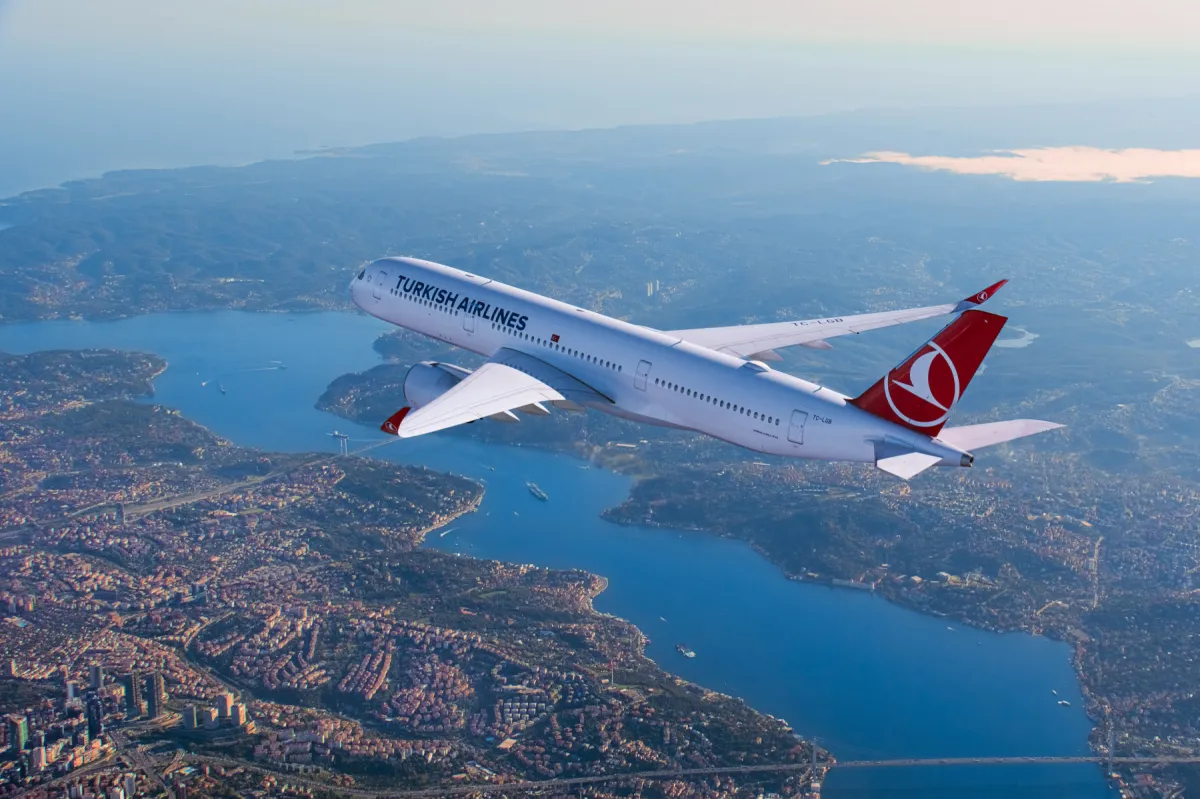
Turkish Miles&Smiles Elite: 2026 Tracker
Turkish Miles&Smiles Elite in 2026: Star Alliance Gold qualification, Istanbul Lounge access, premium handling.
Read article →Independent Miles Mosaic guide. No programme partnerships, no account linking, no scraped balances. Sources cited below; corrections welcomed.
Turkish Airlines Miles&Smiles Elite Plus is the structural top of the Miles&Smiles ladder and the airline's most premium recognition. Elite Plus represents substantial commitment to Turkish Airlines flying and unlocks the programme's most operationally significant benefits, including cabin upgrade vouchers, guaranteed seats on request and highest-priority handling across the network.
Chasing this status across other programmes too? Most frequent flyers hold status with more than one airline or hotel. See our guide to tracking and keeping elite status across every programme, then let Miles Mosaic forecast whether your booked trips will requalify you, with no loyalty password required.
The reading on Elite Plus in 2026 is that it is aspirational rather than transactional. The qualification threshold sits well above Elite and represents structural commitment to Turkish Airlines premium-cabin flying. This guide covers what Elite Plus delivers per the Miles&Smiles benefits and privileges page, the realities of the qualification framework, and whether the tier earns its structural commitment.
Turkish Miles&Smiles Elite Plus earns bonus mileage on Turkish Airlines international Business Class flights, 175% of the miles flown in classes C and D and 160% in K, J and Z, exactly the rates Classic Plus and Elite members already earn. The earning bonus stacks meaningfully across long-haul Business class trips where the underlying mileage accrual is already substantial.
The headline Elite Plus benefits are two cabin upgrade vouchers for each 12-month period of the status, a guaranteed seat on request for bookings made at least 72 hours before departure, subject to availability, the highest checked baggage allowance in the programme at 25 kg extra (or one extra piece on piece-concept routes), first place on the stand-by reservation waiting list, priority when only a limited number of cabin upgrades can be made, and free carriage of sports equipment on domestic flights.
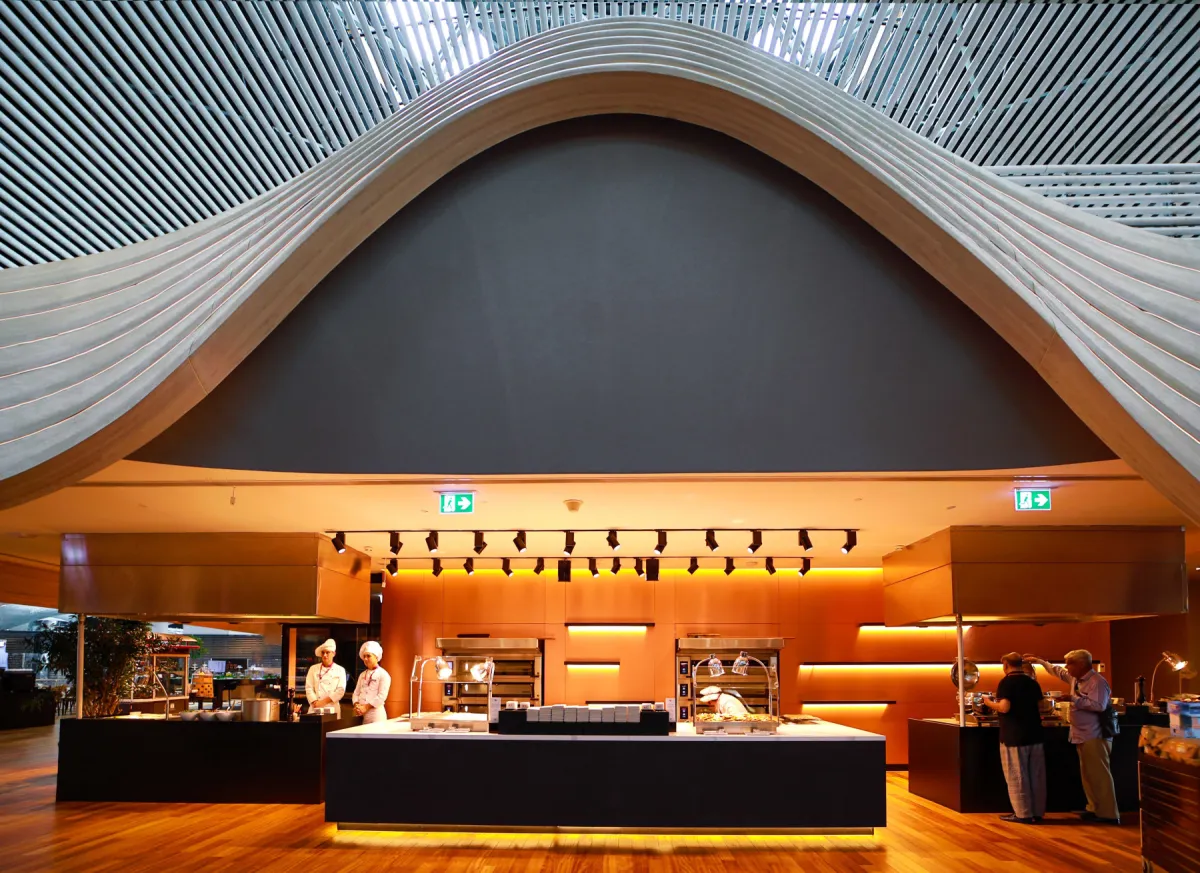
Elite Plus also retains all Elite benefits: Star Alliance Gold status (with the partner lounge access listed on Star Alliance's benefits page), Turkish Airlines lounge access on domestic and international flights with family members or one guest, priority boarding and baggage delivery, free standard and front-row seat selection, the Gate 5 entrance at Istanbul Airport, and priority handling at every Turkish hub touchpoint.
Other Elite Plus benefits include the right to gift three Elite cards, which Turkish Airlines grants once, even if the status is renewed, at 40,000 Miles for each card, the option to borrow up to 15,000 Miles for an award ticket against 10,000 at Elite, and the Business section of domestic lounges at airports where Turkish Airlines splits them into two sections.
Three benefits separate Elite Plus from a well-tooled Elite member with no other status. The first is the two cabin upgrade vouchers for each 12-month period of the status. Turkish Airlines' upgrade page makes each voucher good for one one-way flight, lets family members who are Miles&Smiles members use them, and ties them to Business Class availability: J class more than 72 hours before departure, J or K class from 72 to 24 hours, and any Business class within 24 hours. Used on long-haul Turkish routings, they can turn an Economy fare into a Business class seat worth thousands of dollars of fare differential across the year, and unused vouchers lapse at the end of each 12-month period. The second is the household-extension benefit: Elite Plus members can gift Elite cards to three people, a privilege Turkish Airlines grants only once, even if the status is renewed, and prices at 40,000 Miles per card. For a household with multiple flyers, the gifted Elite cards stretch lounge access and priority handling across the family without requiring each member to maintain their own qualification activity.
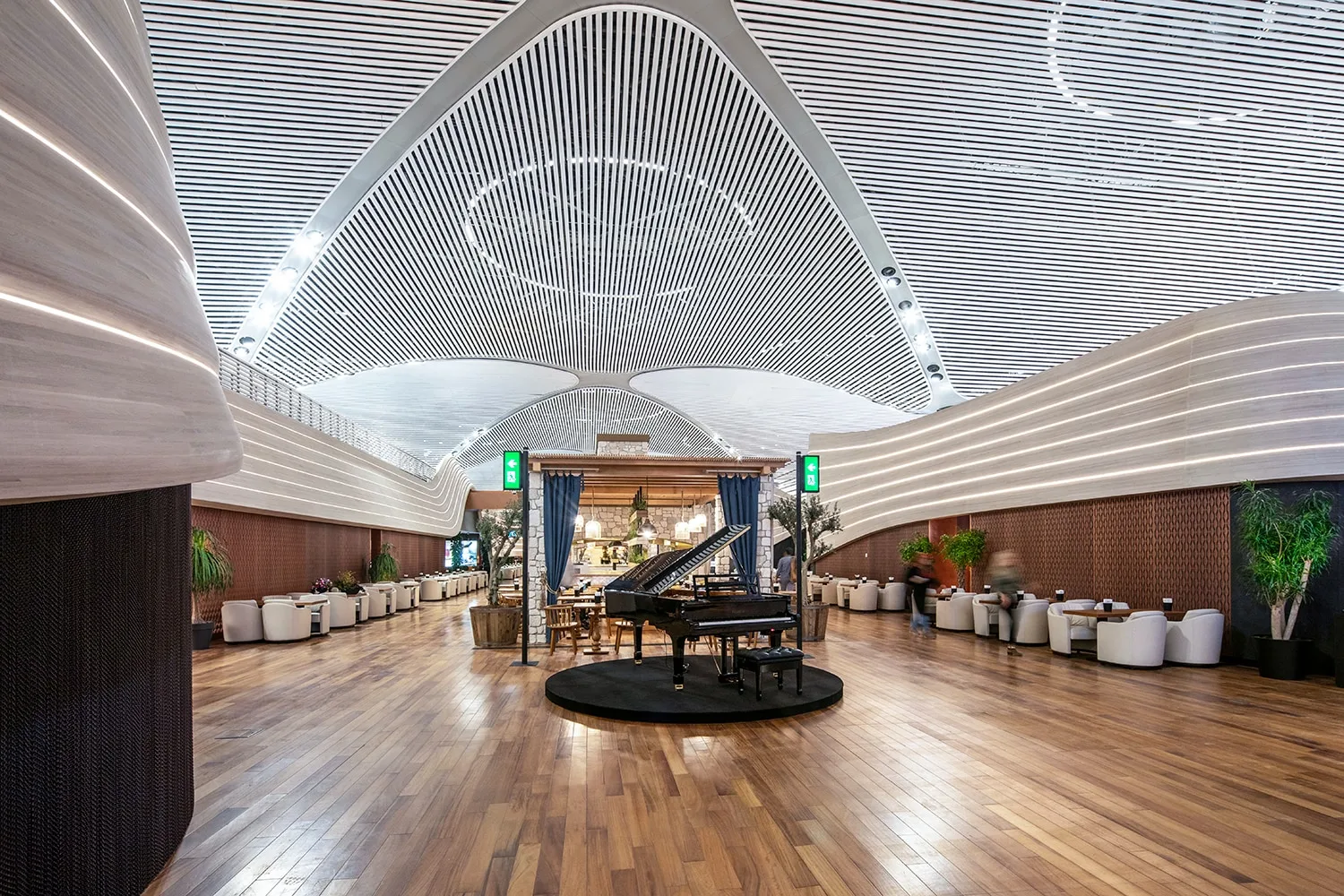
The third is the guaranteed seat on request for bookings made at least 72 hours before departure, subject to availability, which matters most on peak routes that sell out. The 25 kg of extra baggage on top of the fare allowance, against Elite's 20 kg, adds a little more for travellers who fly long-haul leisure routes where overweight charges run US$200+ per excess piece. The combination of the upgrade vouchers, the Elite card gifting and the seat guarantee is the genuinely differentiated Elite Plus value layer; lounge access is not part of it, because at Istanbul Airport's international lounge Elite Plus members use the same Miles&Smiles section as Elite members unless they fly Business Class.
Turkish Miles&Smiles Elite Plus requires 80,000 Status Miles in the preceding 12 months, exactly twice Elite's 40,000, and Turkish Airlines checks the total every day. Status Miles come from Turkish Airlines flying and from Star Alliance partner flying at each partner's booking-class rates, as the Miles&Smiles membership status page sets out.
The Elite Plus gate is the threshold where genuine Turkish Airlines premium-cabin flying becomes structurally load-bearing. The realistic Elite Plus candidate is a traveller whose Turkish Airlines flying includes regular long-haul Business class round-trips, typically four to six a year, combined with consistent regional flying.
A single long-haul Turkish Airlines Business class round-trip on a long-distance route contributes substantial Status Miles given the cabin and distance earning multipliers: an Elite member flying Istanbul-New York in class C or D earns about 17,500 at the 175% rate. Three to four such round-trips combined with consistent shorter-haul Turkish Airlines flying typically clears Elite Plus. Substituting partner flying for some Turkish Airlines flying lowers the per-trip contribution given the Turkish-flying weighting in the framework, but a similar number of premium-cabin trips combined with regional flying typically still clears Elite Plus.
There is no membership year or anniversary. Elite Plus starts on the day the preceding 12 months' Status Miles reach 80,000 and is valid until the last day of the month two years later. To extend it for another two years, earn 40,000 Status Miles in the status's first year or 60,000 across its two years; the extension begins when the current status ends.
| Metric | Elite Plus requirement |
|---|---|
| Status Miles Required | 80,000 |
| Alliance Equivalent | Gold |
| Qualification period | Preceding 12 months, checked daily; status valid 2 years |
Your Turkish Miles & Smiles forecast
Chasing Elite Plus? Enter what you have so far and see where you land. It runs in your browser; nothing is sent anywhere until you choose to save it.
Thresholds verified 2026-09-18. Source Qualification window: the preceding 12 months, checked daily.
Keeping a tier you already hold takes a different number. The full forecaster measures keeping it.
Elite sits below Elite Plus, and the benefit step between the two is concentrated in a handful of Elite-Plus-only instruments rather than in lounge access or earning. Elite gets Star Alliance Gold lounge access across the alliance, international Turkish Airlines lounge access at Istanbul, 20 kg of extra baggage, priority boarding and baggage, free seat selection and the same Business Class earning rates as Elite Plus. Elite Plus adds two cabin upgrade vouchers for each 12-month period, a guaranteed seat on request, 25 kg of extra baggage, the one-time right to gift three Elite cards at 40,000 Miles each, first place on the stand-by reservation waiting list, and priority when cabin upgrades are limited.
The Elite-to-Elite-Plus gap is the largest qualification jump anywhere in the Miles&Smiles ladder. The benefit step is meaningful but concentrated in upgrades, seat guarantees and priority rather than in additional lounge or earning privileges. For travellers whose Turkish Airlines flying naturally produces Elite Plus-level Status Miles, the path is the structural goal; for travellers averaging Elite-level activity, Elite captures most of what matters.
There is no published tier above Elite Plus in the standard Miles&Smiles framework: the membership status page lists Classic, Classic Plus, Elite and Elite Plus. Elite Plus is the structural ceiling.
For travellers whose Turkish Airlines flying naturally produces Elite Plus-level Status Miles, typically four to six long-haul Business class round-trips a year, Elite Plus is the right ceiling. For travellers averaging closer to Elite-level activity, Elite captures the operationally meaningful benefits at substantially lower qualification cost.
Star Alliance Gold is the alliance's top published tier, but several member programmes operate a secondary super-elite tier above their published Gold-equivalent. Lufthansa Senator and HON Circle are the most famous example: Senator takes 2,000 Points and 1,000 Qualifying Points in a calendar year, and HON Circle sits above it at 6,000 HON Circle Points, earned only in Business and First Class on Lufthansa Group and co-issuing partner flights, a published top tier that has no Miles & Smiles equivalent.
ANA Diamond at 100,000 Premium Points and Air Canada Aeroplan Super Elite at 125,000 Status Qualifying Credits in a calendar year are the other anchor comparisons; for Super Elite, Star Alliance flights ticketed by other airlines, Turkish Airlines tickets included, count for no more than 25,000 of those credits. Aeroplan Super Elite offers structurally similar benefits to Elite Plus, guaranteed Business class seat in select fare classes, premium lounge access including the Air Canada Signature Suite at Toronto, additional baggage uplift, and a guest-card programme that mirrors Miles & Smiles's family-gifting structure.
Where Elite Plus distinguishes itself in this peer set is the breadth of Istanbul hub benefits, though not through an Elite-Plus-only lounge. The Miles&Smiles section of Turkish Airlines' international lounge at Istanbul, which Elite Plus shares with Elite and other Star Alliance Gold members when flying Economy, is one of the largest status lounges in the world and structurally rivals the Lufthansa First Class Lounge at Frankfurt and the Cathay Pier at Hong Kong for sheer floor space and amenity density; the Business section next door is only for passengers flying Business Class. The HON Circle Lounge at Frankfurt and the Air Canada Signature Suite at Toronto are arguably more exclusive in atmosphere, but both are reserved for tiers above the Miles & Smiles Elite Plus equivalent. For a traveller who connects through Istanbul regularly, Elite Plus is the most premium status tier in the Star Alliance reachable below the top tiers at competing carriers.
The doubling from 40,000 Status Miles (Elite) to 80,000 Status Miles (Elite Plus) is the largest single-tier jump in the Miles & Smiles ladder by absolute and percentage measure. For most Elite holders, the additional 40,000 Status Miles represents more than two additional long-haul Turkish Airlines Business class round-trips beyond the qualification activity that already cleared Elite, since an Istanbul-New York round-trip in class C or D earns about 17,500 at the elite rate and two such trips fall short of 40,000. The cumulative time-on-aircraft cost is meaningful, typically 40 to 60 additional hours of flying per year, and the incremental cash outlay on premium-cabin tickets is substantial, easily US$15,000 to US$25,000 above the Elite-qualifying baseline depending on routes flown.
The benefit step from Elite to Elite Plus is concentrated in the Elite-Plus-only items (upgrade vouchers, the guaranteed seat on request, Elite card gifting), an extra 5 kg of baggage, and first place on the stand-by reservation waiting list; the earning rate on Turkish Airlines flights and the international lounge at Istanbul are the same as at Elite. The honest framing is that Elite Plus is operationally meaningful but the benefit step is smaller in absolute terms than the qualification step. The right framing is: if your Turkish Airlines flying naturally lands at 70,000 to 90,000 Status Miles a year, push for Elite Plus and extract every benefit. If your flying naturally lands at 45,000 to 65,000 Status Miles a year, do not contort routings or buy mileage runs to chase Elite Plus, the benefit step does not justify it.

The Elite Plus path is built on structural Turkish Airlines premium-cabin flying, typically a combination of Business class long-haul round-trips year-round. The Status Miles framework rewards premium cabins disproportionately, and the realistic Elite Plus candidate is a traveller whose work pattern includes regular long-haul Turkish flying.
A worked example clarifies the structural commitment. Take an Istanbul-based managing partner at a global firm whose role requires monthly Turkish Airlines Business class round-trips for client work between Istanbul and various Asia-Pacific, European, and US destinations, twelve Business round-trips a year, a few of them on routes as long as Istanbul-Singapore, which alone earns about 18,900 Status Miles at the elite rate. The combination of premium-cabin flying contributes substantial Status Miles, well past the Elite Plus threshold.
Drop the cadence to one Business round-trip every two months and the same itinerary lands at roughly half the previous total, around the 80,000 line, so whether it still clears Elite Plus depends on how many of those six trips go to Europe rather than to Asia or the US. The structural commitment difference between Elite and Elite Plus is substantial: twice the Status Miles.
The upgrade vouchers are the operational benefit worth optimising around. Elite Plus members who fly long-haul Turkish Airlines routes regularly extract substantial value from using them on the longest Economy bookings, and from the guaranteed seat on sold-out peak flights. Card Miles converted into Status Miles (up to 40,000 in any 12 months) and purchased Status Miles (up to 10,000 for Elite members close to the line) can close part of the gap, but even with the US card's direct Status Miles (up to 5,000 a calendar year) they fall well short of the 80,000, and converting the full 40,000 takes 200,000 card Miles. The qualification path is documented on the Miles&Smiles membership status page.
Turkish Airlines' competitive position depends on the Istanbul hub strategy, and Elite Plus is the customer-loyalty programme that the carrier uses to lock in high-yield premium-cabin flyers who could otherwise route on Emirates via Dubai, Qatar Airways via Doha, or Lufthansa via Frankfurt. The Istanbul hub now serves more destinations than any other airport globally, with regular non-stop Turkish Airlines service to 130-plus countries from a single terminal. The strategic implication for Elite Plus members is that almost any reasonable Europe-Asia, Europe-Africa, or Europe-Middle East routing can be operated end-to-end on Turkish Airlines metal with a single Istanbul connection, which keeps Status Mile accrual concentrated on Turkish-marketed flights and maximises the benefit return.
For travellers comparing Elite Plus to Emirates Skywards Platinum or Qatar Privilege Club Platinum on parallel premium-cabin loyalty paths, the operational case for Elite Plus rests largely on Istanbul's connectivity advantage. Dubai and Doha hubs each operate around 80 to 100 long-haul routes; Istanbul's roughly 300-route network is the largest by a wide margin. The same flyer who would clear Skywards Platinum on five long-haul Emirates Business class round-trips can typically clear Miles & Smiles Elite Plus on four to six Turkish Business round-trips, with much wider routing flexibility because so many origin-destination pairs are served non-stop or with a single Istanbul connection on Turkish metal.
Three Elite Plus surprises catch returning Miles&Smiles members. The first is the qualification structural commitment versus benefit value calibration. The Elite-to-Elite-Plus qualification jump requires substantial additional Turkish Airlines flying volume, but the benefit step is concentrated in upgrade vouchers, the guaranteed seat and Elite card gifting. Travellers who push to Elite Plus for a higher earning rate will not find one: the Miles&Smiles benefits table gives Classic Plus, Elite and Elite Plus the same up to 1.75 times Miles and Status Miles on international Business flights.
The second is the lounge scope at Elite Plus. Turkish Airlines' lounge terms split the Istanbul Airport international lounge into a Business section, open only to passengers flying Business Class, and a Miles&Smiles section for Elite Plus, Elite and other Star Alliance Gold members, so an Elite Plus member transiting Istanbul in Economy uses the same section as an Elite member. The only lounge advantage over Elite is the Business section of domestic lounges that have two sections, per the lounge terms and conditions.
The third is the partner Status Miles limitation. Partner flights count toward Elite Plus, but at flat booking-class rates with no uplift for status: the tables for Lufthansa, SWISS, ANA and United give every member the same percentage, with Business topping out at 150% of the miles flown. On Turkish Airlines' own flights, Classic Plus, Elite and Elite Plus cardholders earn 175% in Business classes C and D and 160% in K, J and Z, against 150% and 135% for Classic members. Maintaining Elite Plus via partner flying alone is structurally difficult, and the path remains Turkish-flying-led.
Elite Plus is the Turkish Miles&Smiles tier where genuinely heavy Turkish Airlines flying receives the most premium recognition the programme offers. The cabin upgrade vouchers, the guaranteed seat on request, the extra baggage allowance, the Elite card gifting and first place on the stand-by reservation waiting list combine into an experience that is meaningfully better than Elite. The qualification threshold is genuinely demanding, most Turkish Airlines customers never reach it, and the structural commitment requires substantial long-haul premium-cabin flying year-round. For travellers whose work patterns naturally produce that volume, Elite Plus is the right ceiling; for travellers averaging Elite-level activity, Elite captures most of what matters at substantially lower qualification cost. Track your Status Miles toward Elite Plus free with Miles Mosaic.
Programme rules verified against the official sources below. External sites open in a new tab.
See your requalification forecast in under a minute. No account, and never a loyalty password.
Forecast my status, free →Share
Last reviewed: · How we research and update
Turkish Miles&Smiles Elite in 2026: Star Alliance Gold qualification, Istanbul Lounge access, premium handling.
Read article →Star Alliance in 2026: the 26-airline roster, falling to 25 when Asiana leaves in December, Gold benefits, and the best programmes to hold.
Read article →