Virgin Flying Club Silver: 2026 Tracker
Virgin Atlantic Flying Club Silver in 2026: 400 Tier Points qualification, SkyTeam Elite priority handling, path to Gold.
Read article →Independent Miles Mosaic guide. No programme partnerships, no account linking, no scraped balances. Sources cited below; corrections welcomed.

Virgin Atlantic Flying Club Red is the base tier of the programme, where every Flying Club member starts on joining. While Red is not an elite tier, understanding it matters for travellers planning the path up through Silver and Gold and for members who plan to engage primarily through award redemptions and partner activity.
Chasing this status across other programmes too? Most frequent flyers hold status with more than one airline or hotel. See our guide to tracking and keeping elite status across every programme, then let Miles Mosaic forecast whether your booked trips will requalify you, with no loyalty password required.
The 2026 reading on Red is that it is the orientation tier rather than a destination, the level at which Flying Club introduces you to the Virgin Atlantic Tier Points framework, the SkyTeam partnership, and the Virgin Points earning structure. This guide covers what Red delivers per the Flying Club page, the qualification framework, and the practical paths to the higher tiers.
Red earns Virgin Points at the base earning rate on Virgin Atlantic flights and accumulates Tier Points (the qualification counter) based on cabin and booking class, per Virgin Atlantic's membership tiers page. The base earning rate is functional but not transformative, and the structural rationale for chasing Silver or Gold is largely about unlocking the elite benefits rather than the base earning itself.
The operational benefit set at Red is essentially the programme's baseline, as Virgin Atlantic's Red benefits page lists it: any seat on a Virgin Atlantic flight can be booked with Virgin Points, with the lowest prices labelled Saver, Virgin Points can be spent with partner airlines including Delta and Air France-KLM, and a Household account pools the Virgin Points of Flying Club members who live at the same address.
Red does not unlock any alliance status, lounge access or priority check-in. Its airport benefit is Advanced Economy boarding, which lets everyone on a Red member's booking board first in Economy. Free seat selection at Red covers only Economy seats on Virgin Atlantic Holidays bookings, from 7 days before travel. The one bonus on flight earnings among Red's listed benefits arrives only after a first High Five reward, covered below. The Red benefit set is best understood as the foundation for next year's push to Silver, where the elite framework actually begins.
The most important Red-tier feature is the redemption framework. Reward seats on Virgin Atlantic's own flights vary in price, but Delta flights follow a published chart: Virgin Atlantic's Delta partner page prices a one-way non-stop Delta One seat from the UK to the East Coast of the US at 47,500 Virgin Points off-peak and 57,500 at peak, before taxes, fees and surcharges. Even at Red, the redemption value is the strongest reason to engage with Flying Club.
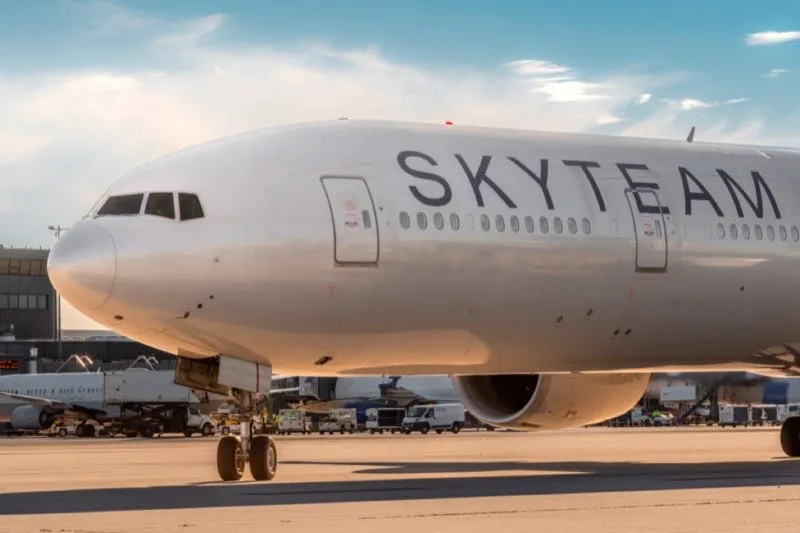
Virgin Atlantic joined SkyTeam on 2 March 2023 as the alliance's first and only UK member, and the move structurally enlarged the partner network available to Flying Club members at every tier including Red. A Red-tier member can credit eligible flights on Delta, Air France, KLM, Korean Air and the other SkyTeam airlines Virgin Atlantic partners with to Flying Club, and spend Virgin Points with those airlines; Delta, Air France and KLM were already joint venture partners before the alliance move. The Flying Club tier hierarchy now maps onto SkyTeam status: Silver = SkyTeam Elite, Gold = SkyTeam Elite Plus. Red itself maps to nothing on the alliance side, Red members do not unlock any SkyTeam recognition on partner carriers, which is the cleanest articulation of why Red is a launchpad rather than a destination.
Red sits in a crowded competitive landscape for UK-based travellers. The British Airways Club (formerly the Executive Club) and its base tier, Blue, is the direct competitor: neither base tier's published benefits include lounge access or priority check-in, and both programmes set the next tier by published Tier Points thresholds (3,500 Tier Points for BA Bronze, collected in a fixed year running 1 April to 31 March and reset at the end of it; 400 Tier Points for Flying Club Silver within a 12-month period, then again within each membership year to keep it). Aer Lingus AerClub starts members at Green, also a no-frills base tier. Air France-KLM Flying Blue uses an Explorer base tier with similarly limited benefits. The structural difference is the redemption side: Flying Club's Delta One sweet spots and the strong Virgin Points partner chart make Red a more useful redemption-only home than BA Blue is for short-haul Avios redemptions burdened by Reward Flight Saver surcharges. For a UK-based traveller who flies once or twice a year and prioritises redemptions over status, parking miles in Flying Club at Red is frequently more productive than chasing Bronze in the BA programme.

Red requires 0 Tier Points, every Flying Club member starts at Red when they join the programme. The Tier Points framework documented on Virgin Atlantic's membership tiers page is the qualification metric for Silver and Gold, with Tier Points earned on every flight at rates set by cabin and booking class, and on partner airlines by distance as well.
Tier Points earning is the key concept to understand at Red because it determines the path to Silver. On Virgin Atlantic's own flights, a return in Economy Light earns 50 Tier Points and a return in Upper Class on a J, C, D or I fare earns 400, enough for Silver in one trip. Partner rates depend on distance as well as cabin and booking class: Delta One in J, C, D or I on an international flight over 2,000 miles earns the same 200 Tier Points a flight, per Virgin Atlantic's Delta earning table.
Tier Points count within a 12-month period rather than a calendar year. Reaching Silver or Gold then starts a personal membership year that runs from the day after you qualify to the end of that calendar month a year later. Keeping the tier means earning its Tier Points again within that membership year; a member who falls short moves down one tier and their Tier Points reset.
Joining SkyTeam in 2023 added more partner airlines on which Flying Club members earn, but partner Tier Points did not start there. Virgin Atlantic's own partner pages were already listing Tier Points for Delta flights and for Air France and KLM flights in early 2021. Eligible partner flights contribute at the rates on Virgin Atlantic's airline partners page.
| Metric | Red requirement |
|---|---|
| Qualification period | 12 months to qualify; membership year to keep |
| Note | Programme records do not currently expose structured qualification thresholds for this tier; refer to the official source above. |
Red sits at the base of the Flying Club ladder. Above Red, Silver at 400 Tier Points is the first elite tier and the entry to SkyTeam Elite status. Silver earns a bonus on Virgin Atlantic flights, priority check-in at SkyTeam partner airports, and access to the operationally meaningful elite benefits framework.
The 400-Tier-Point gap from Red to Silver is achievable for moderate Virgin Atlantic flyers. One Upper Class return on a J, C, D or I fare earns exactly 400 Tier Points, so a single trip clears Silver. In Economy it takes four returns in Economy Delight or on the higher Economy Classic fares, or eight on Economy Light and the lower Economy Classic fares.
For travellers flying fewer than four flight-only Virgin Atlantic Economy round-trips a year and no Upper Class, Red is the natural ceiling unless Virgin Atlantic Holidays packages or US card spending add Tier Points. The programme retains value through Household pooling and award redemption with Virgin Atlantic's airline partners. For travellers projecting Flying Club as a primary loyalty programme, Silver should be the immediate goal, the benefit step from Red to Silver is meaningful even though the qualification gap is modest by industry standards.

For travellers who plan to engage seriously with Flying Club, the practical strategy is to maximise Tier Points per sector rather than thinking in terms of total flights. The Tier Points framework rewards cabin and booking class disproportionately: a Virgin Atlantic Upper Class return on a J, C, D or I fare earns eight times the 50 Tier Points of an Economy Light return.
A worked example clarifies. Take a London-based consultant whose work pattern includes two Virgin Atlantic Upper Class round-trips a year for client engagements in New York. Two Upper Class round-trips on J, C, D or I fares earn 800 Tier Points, twice the Silver threshold, and even one trip clears Silver. The same two trips in Economy Classic earn 100 or 200 Tier Points depending on the booking class, short of Silver.
Tier Points do not only come from flying. In the US, the Virgin Red Rewards Mastercard earns 25 Tier Points for every US$2,500 of qualifying spend in a month, up to 50 Tier Points a month, per Virgin Atlantic's US credit card page; the UK cards earn Virgin Points and reward vouchers instead. Qualifying UK-originating Virgin Atlantic Holidays packages double the Tier Points on their Virgin Atlantic flights, and such bookings of £4,000 or more made between 21 April 2026 and 31 January 2027 give the lead booker alone 200 bonus Tier Points.
Partner flying is what opens the qualification path to travellers based outside the UK. Eligible flights on Delta, Air France, KLM and the other SkyTeam carriers Virgin Atlantic partners with contribute Tier Points at the published rates, so a traveller whose main airline is a SkyTeam carrier rather than Virgin Atlantic can still build towards Silver.
In November 2025 Virgin Atlantic announced the High Five reward, which recognises Flying Club members who have flown Virgin Atlantic in five different calendar years, consecutive or not, counting back to 1 January 2021. Every tier gets the same reward, 12,000 Virgin Points, and Red members alone also earn 10% bonus Virgin Points on later High Five qualifying flights after their first High Five, while they remain Red, per Virgin Atlantic's High Five page and its terms. Only flights operated and marketed by Virgin Atlantic count, one a calendar year, so a single Virgin Atlantic return or one-way a year earns that year's stamp, while Delta and other partner flights earn none. For a Red-tier member who flies Virgin Atlantic occasionally, that 10% is the only bonus on flight earnings among Red's listed benefits, and a further 12,000 Virgin Points follow each time the count reaches another five years of flying. Combined with the option to spend Virgin Points with SkyTeam partners, the High Five recognition gives committed but low-volume Flying Club members a more meaningful retention story than the programme offered them before.
Take a Manchester-based family that flies Virgin Atlantic to Orlando once per year for a fortnight's holiday, two adults and two children, all four in Economy. Booked as flights only, the round-trip credits 50 or 100 Tier Points per member, depending on the Economy fare, and because Tier Points only count within a 12-month period, one such trip a year never adds up to Silver's 400, however many years it continues. Booked as a qualifying Virgin Atlantic Holidays package, the same flights earn double Tier Points, and a qualifying package of £4,000 or more booked by 31 January 2027 gives the lead booker 200 bonus Tier Points on top, which can take the lead booker to Silver from one Economy Delight trip. Yet the redemption value of the accumulated Virgin Points balance can be substantial. Manchester to Orlando is about 4,230 miles each way, and Virgin Atlantic's earning page credits Economy Classic fares in L, U and M at 100% of the miles flown and those in Q, X, N and O at 50%, so if all four are Flying Club members pooling their points in a Household account, that one trip banks roughly 34,000 or 17,000 Virgin Points a year. At the higher rate that passes the 47,500 Virgin Points of an off-peak Delta One seat from the UK to the US East Coast within two years; at the lower rate it takes nearly three, before any credit card or Amex Membership Rewards points. Red works for this household. Silver and Gold do not on flight-only bookings, because the flying pattern cannot reach 400 Tier Points within 12 months, let alone keep a tier. The right strategic move for a family in this profile is to stay at Red, accumulate Virgin Points aggressively through card and partner activity, and treat the High Five reward as the meaningful long-term recognition.
Two Red surprises catch new Flying Club members. The first is the Tier Points versus Virgin Points distinction. New members sometimes assume that the redeemable Virgin Points balance also drives tier qualification, and it does not, Flying Club separates spendable Virgin Points from qualifying Tier Points, with each measured separately. A member with a substantial Virgin Points balance from card transfers can still be at Red if no flown sectors have generated Tier Points.
The second is the renewal clock, which is not a rolling window. Silver reached on 20 January 2026 starts a membership year that runs to 31 January 2027, and keeping Silver means earning another 400 Tier Points within it. A member who flies heavily before the upgrade and then stops moves down to Red when that membership year ends, with Tier Points reset, as Virgin Atlantic's membership tiers page explains.
The third pitfall is partner earning. Tier Points on partner flights depend on the partner's booking class and route length, and the cheapest fares can earn none: Aeromexico's E, L, Q, T and V Economy fares earn no Tier Points on flights under 2,000 miles, although Korean Air credits every Economy class it lists. Check the partner's table on Virgin Atlantic's airline partners page before booking.
Red is the Virgin Atlantic Flying Club starting point, useful as the framework reference for understanding the Tier Points qualification path to Silver and beyond, limited as a destination tier in its own right. The 400-Tier-Point Silver threshold is the immediate goal for any traveller planning to engage seriously with the programme, and the operational benefit step from Red to Silver is meaningful. For travellers whose Virgin Atlantic Group flying is structurally meaningful, or whose Delta, Air France-KLM or other SkyTeam partner flying contributes substantially, the path leads through Silver to Gold where the alliance benefits become operationally transformative. The structural value of Red itself sits in the Virgin Points redemption network including the partner award sweet spots. Track your Tier Points toward Silver and beyond free with Miles Mosaic.
See your requalification forecast in under a minute. No account, and never a loyalty password.
Forecast my status, free →Share
Last reviewed: · How we research and update
Virgin Atlantic Flying Club Silver in 2026: 400 Tier Points qualification, SkyTeam Elite priority handling, path to Gold.
Read article →SkyTeam in 2026: the live member roster, Elite and Elite Plus benefits, where Flying Blue and Delta fit, and how to use the alliance effect…
Read article →